The moon high in the sky, especially clear in the crisp air; Venus, the evening star, shining brightly in the red evening sky above the dark horizon; in between, Jupiter, the largest of the planets; and now, with the approaching night, the brightest stars: Capella, Castor, Pollux, Arcturus, and all the others, more and more, almost too many to count. Up there in the sky. And down below?
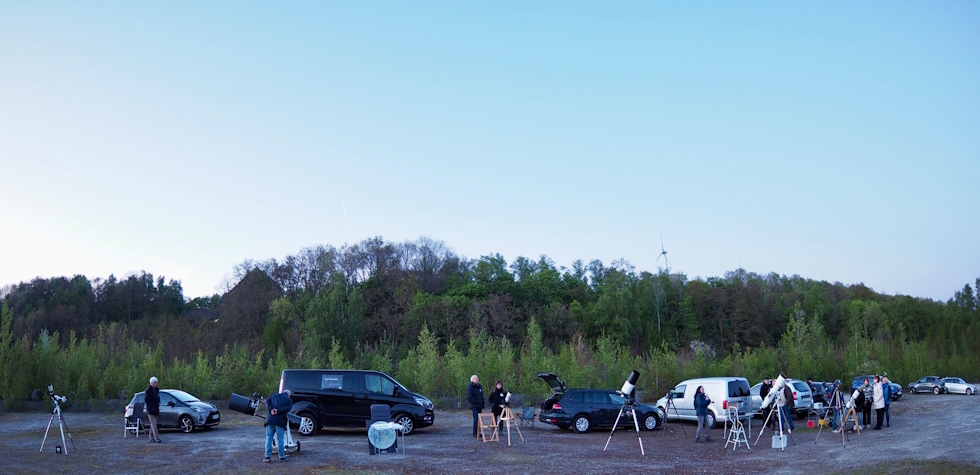
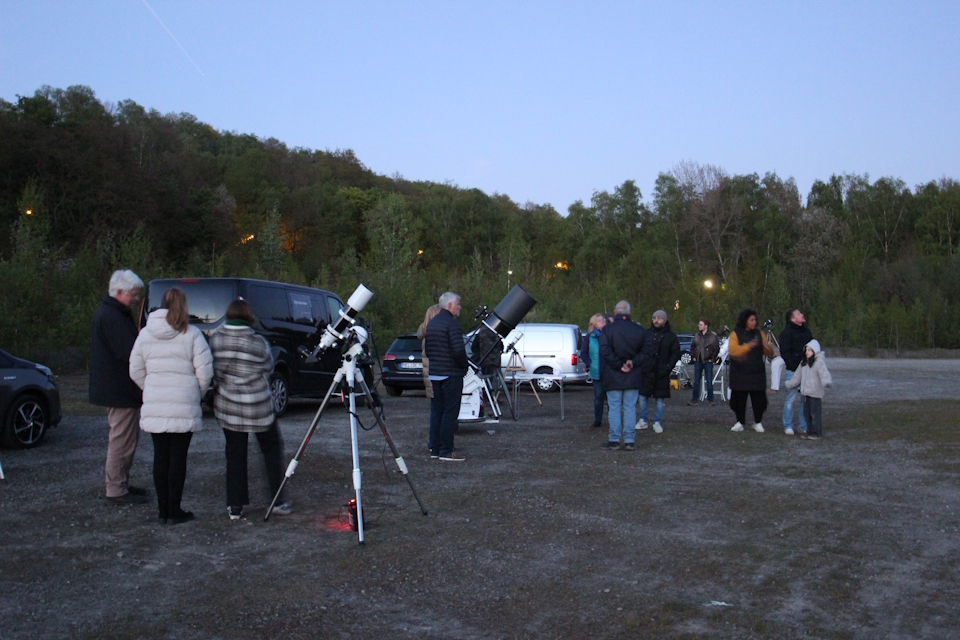
Down below, the Sternstunden on Vosslinke is in full swing. It started as planned at 9 p.m., when it was still quite bright. The stargazing team from kosmos-os had already set up their impressive array of equipment. From small refracting telescopes to very large reflecting telescopes, visitors were treated to a wide range of observing opportunities. Over 20 visitors had come, young and old.
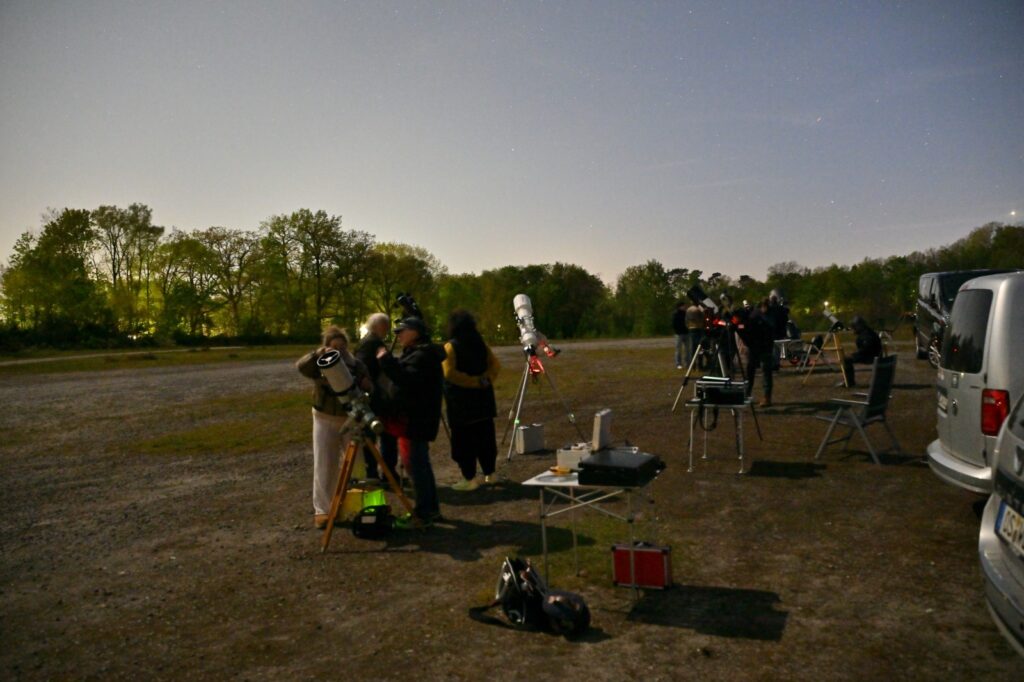
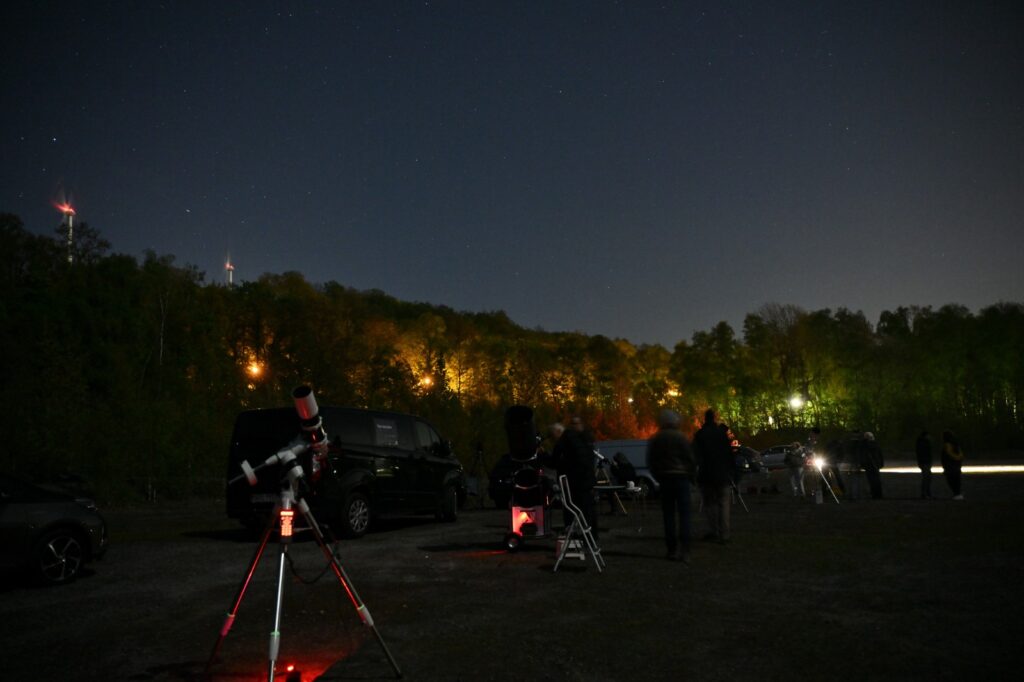
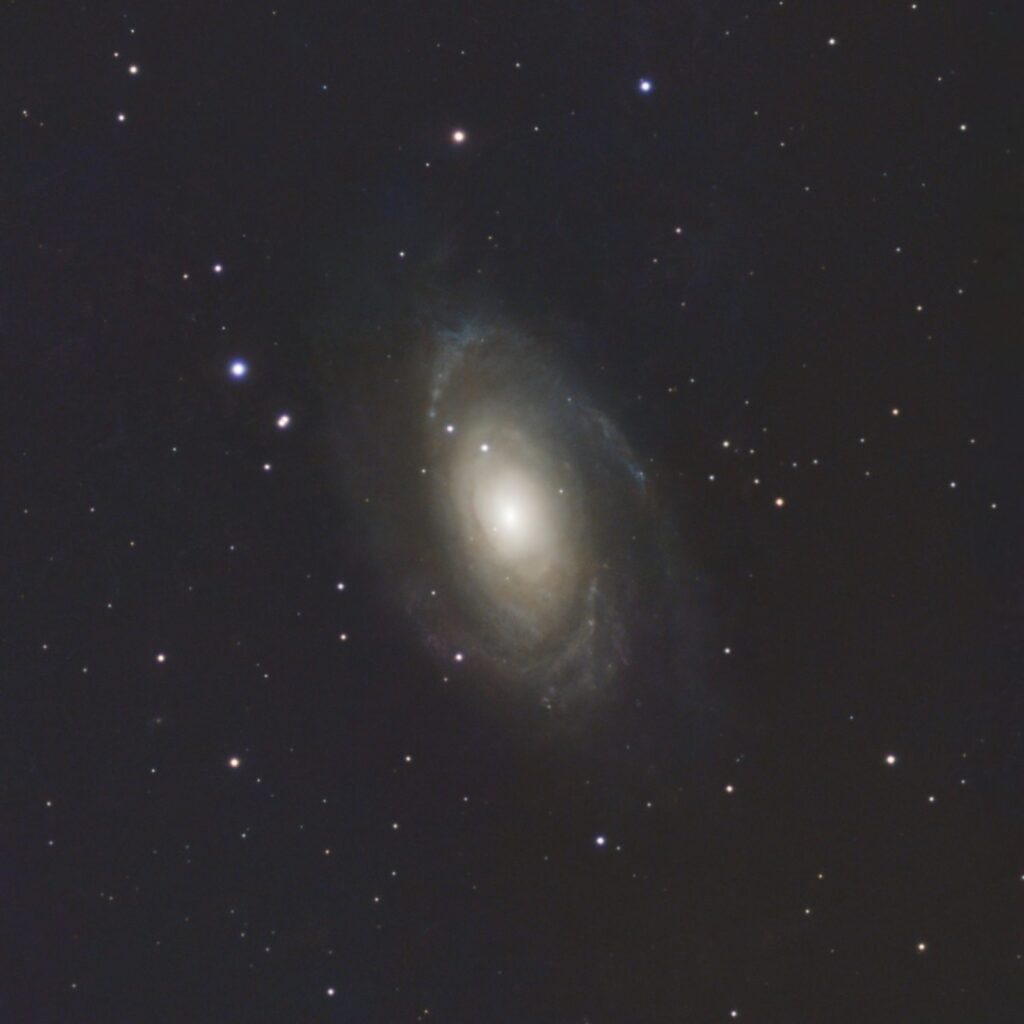
Now, around 10 p.m., the Vosslinke telescope reveals its true power. It's darker than almost any other place in Osnabrück. The moon, with all its craters and diverse structures, is as impressive as ever. Venus, seen through the large telescope, shows a phase similar to our moon. This is astonishing. Jupiter, visible through every telescope, with its stripes on the surface and its "lunar ballet," hints at a scale almost unimaginable for us on Earth. The multiple star system Castor is the first stop outside our solar system. Next come the two globular clusters M3 and M13, vastly distant and mysteriously beautiful. Meanwhile, one of our telescopes is working automatically, capturing an image of the even more distant galaxy M81 in the constellation Ursa Major. Our visitors take all this with them as they leave the Vosslinke around 11 p.m. Perhaps we will soon have the pleasure of welcoming them back for another astronomical experience during our stargazing sessions at Piesberg.
Impressions
(Photo: Carsten Debbe)
(Photo: Werner Wöhrmann)
(Photo: Olaf Homeier)
(Photo: Olaf Homeier)
(Photo: Olaf Homeier)
