Gülpe is a small village in the Westhavelland region. While some people may have heard of Westhavelland, Gülpe is likely unknown to most. That is not the case for astronomers, however, because the sky there is truly dark! At night, you can easily see the Milky Way with the naked eye, as well as the Andromeda Nebula—which is not actually a nebula, but our vast neighboring galaxy. It is the most distant celestial object visible to the naked eye.
It is no wonder, then, that we at kosmos-os decided to set up our astronomy camp in Gülpe this summer - specifically around mid - August, near the time of the new moon when its light wouldn't interfere. Achim, Burkhard, Gerold, Thomas G., Ulrich, and Werner set off on the journey, which took about five hours. We were able to pitch our camp on an old sports field, setting up telescopes (naturally) and arranging our accommodation - either in tents or in vehicles converted into sleeping quarters. Some arrived and departed at different times and stayed for varying durations, depending on their available free time.
The weather was mixed. However, when the night was clear, the starry sky revealed itself in all its splendor. High in the sky, Cygnus - a distinctive constellation - "flies" against the glowing band of the Milky Way, accompanied by Vega, the brilliant principal star of Lyra. As the night progresses, other impressive constellations rise in the east, bringing with them many interesting celestial objects. The Andromeda Galaxy then appears almost at the zenith and is clearly visible to the naked eye; through binoculars, one can even discern its vast extent and shape in the sky. The Pleiades, too, appear almost mystical above the horizon; it is easy to understand why they have played a special role in so many cultures. Towards morning, Orion rises as well, accompanied by the constellation Gemini and its main stars, Castor and Pollux.
Down on Earth, we were actively using our telescopes and cameras to peer deep into space. Naturally, the highly complex technology involved presented a few hurdles, but we overcame them all through teamwork. The result was a series of stunning, colorful images. We also monitored the brightness of the nova in the constellation Corona Borealis—an event we had been anticipating for months—though, unfortunately, the results indicate that we must remain patient.
After returning to Osnabrück, we were certain we would come back: After Gülpe comes Gülpe!
Impressions:
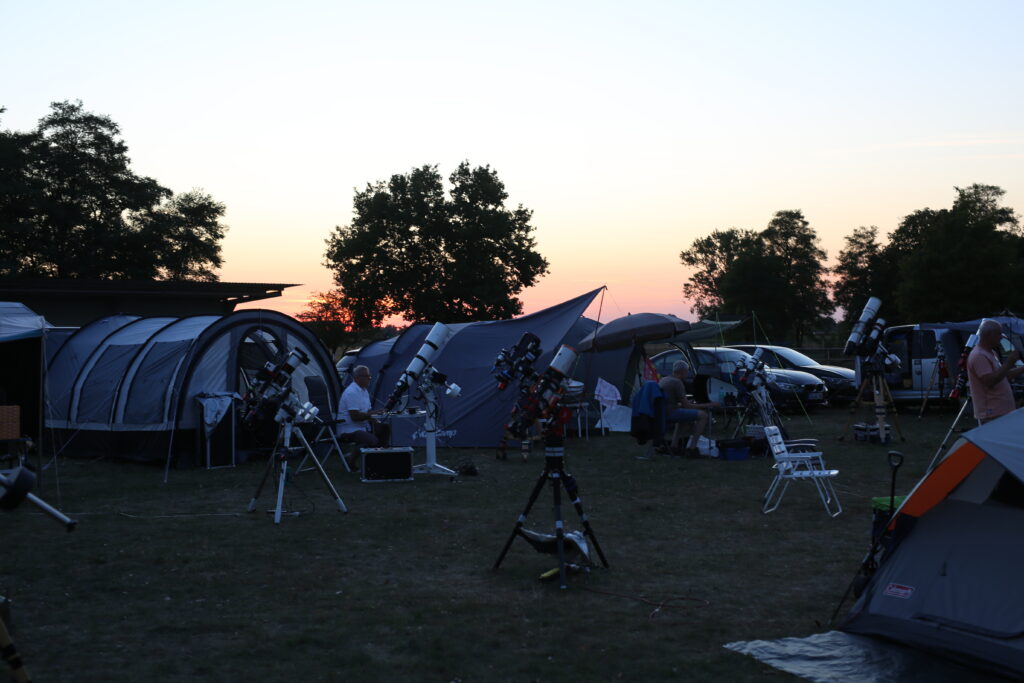
Photo: Gerold Holtkamp
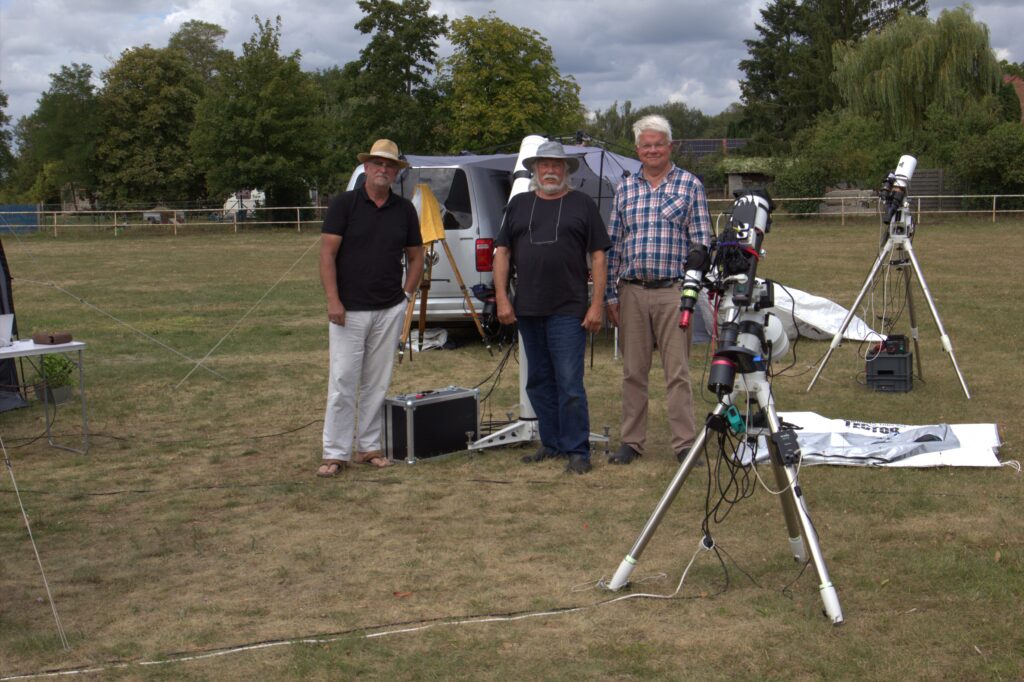
Photo: Werner Wöhrmann
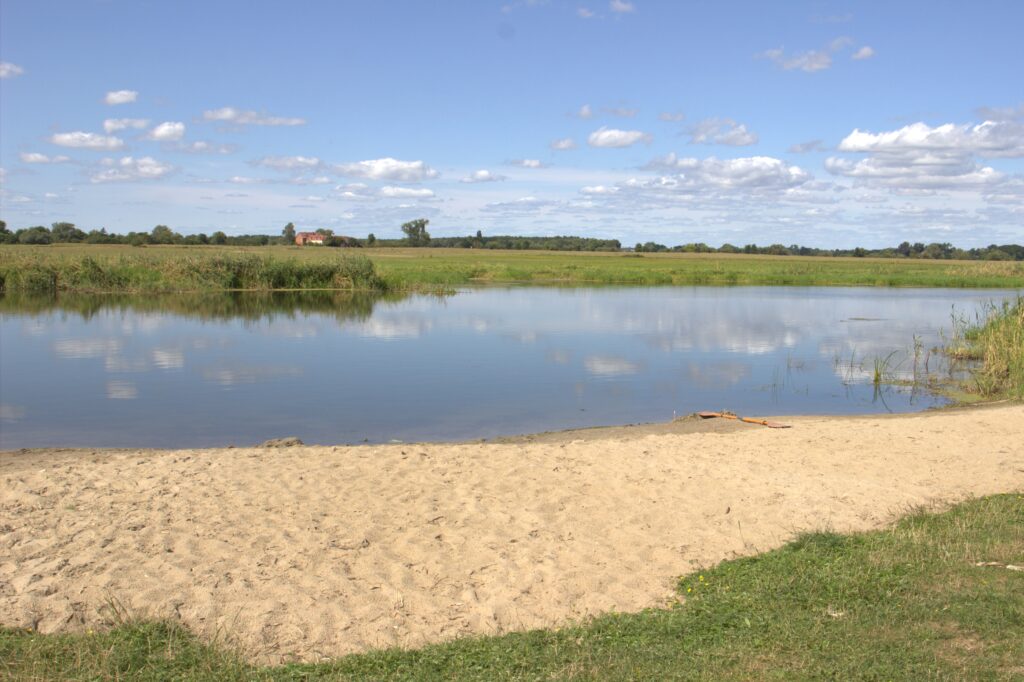
Photo: Werner Wöhrmann
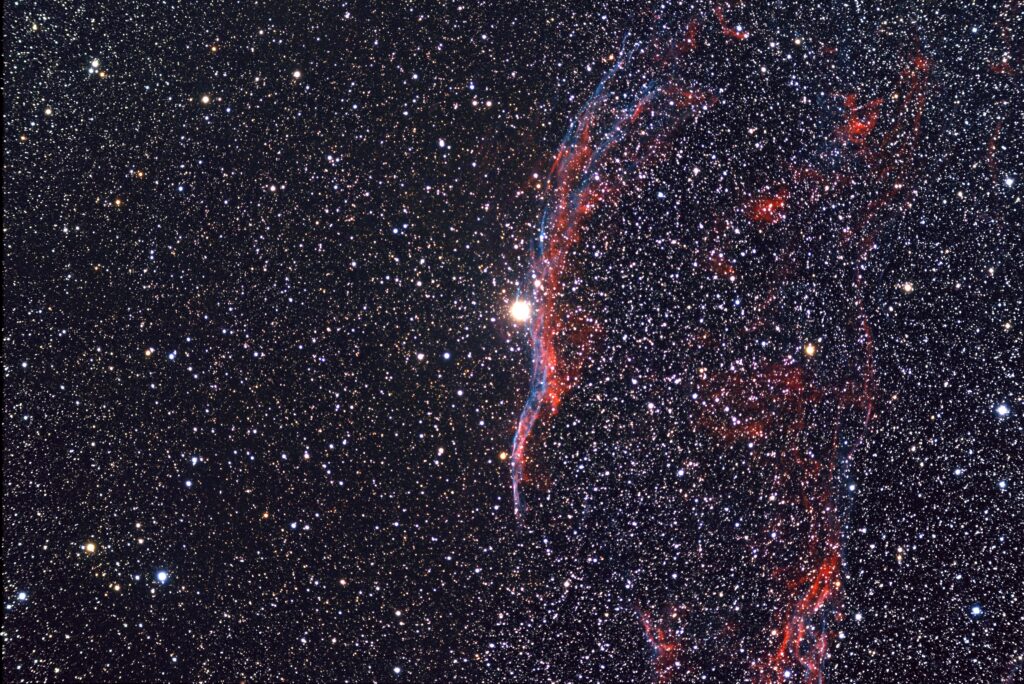
Photo: Gerold Holtkamp
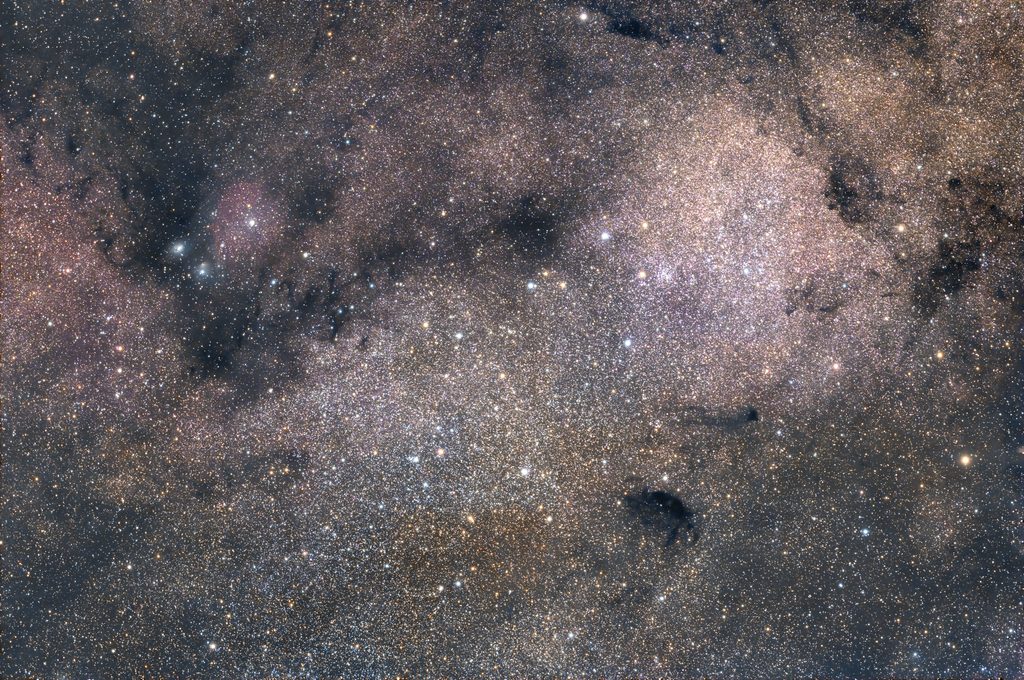
Photo: Ulrich Landwehr
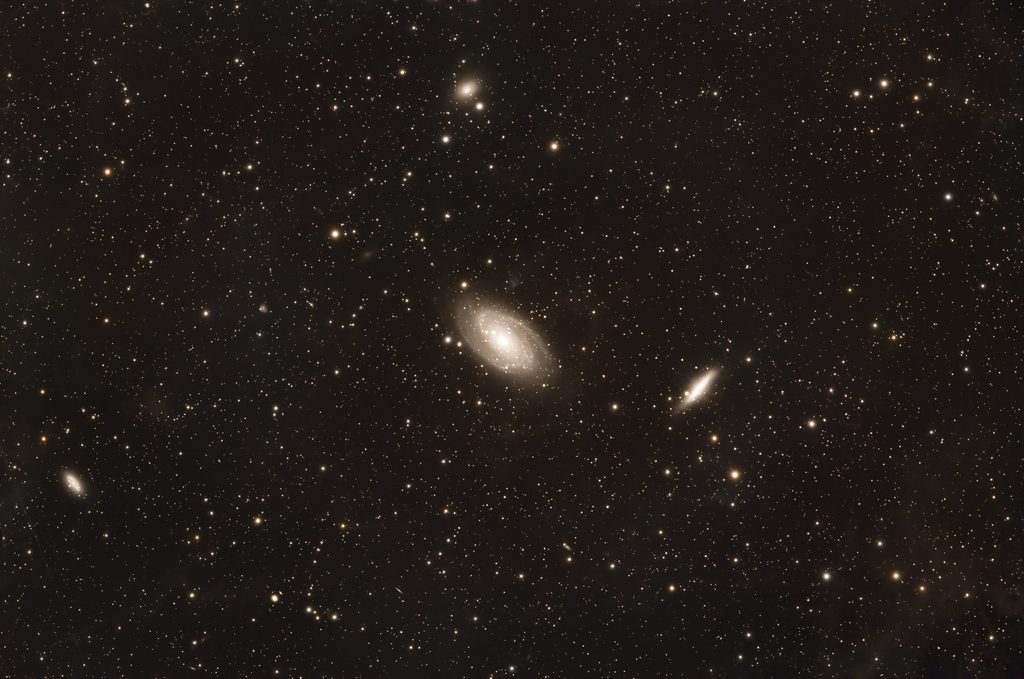
Photo: Ulrich Landwehr
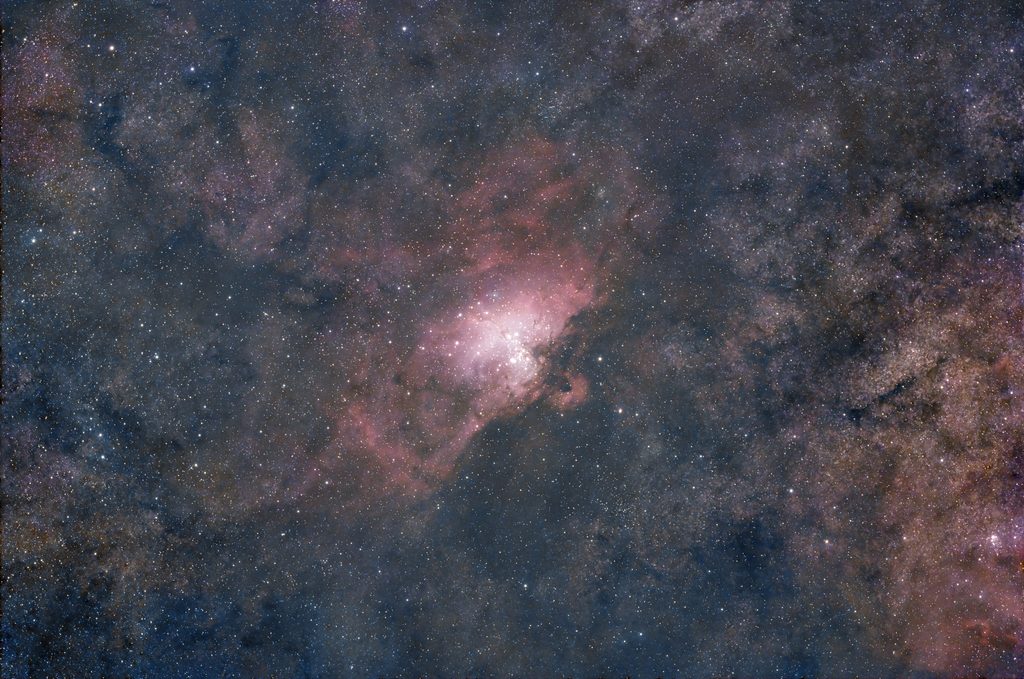
Photo: Ulrich Landwehr
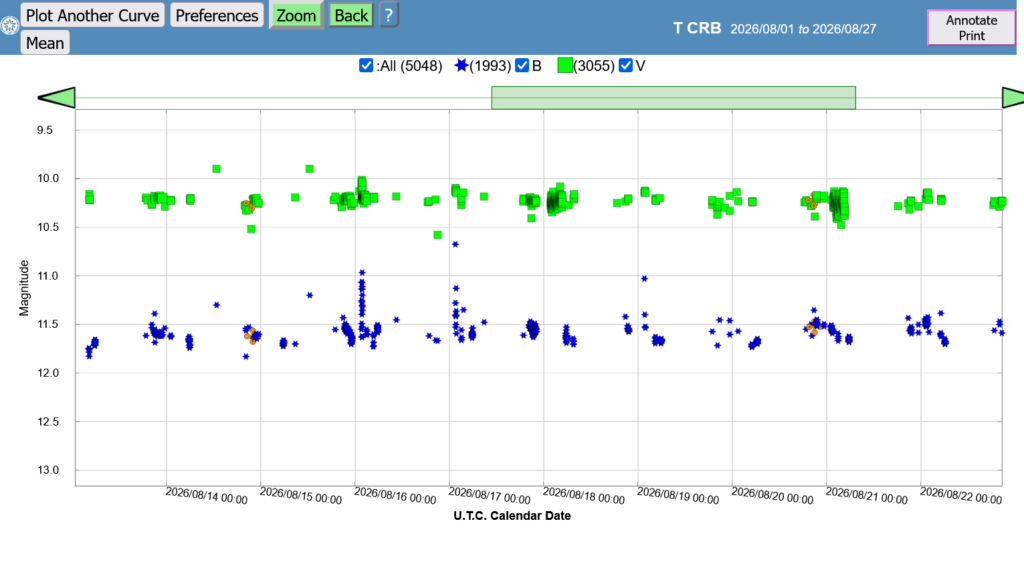
The dots show the brightness levels in the green and blue spectral ranges, measured by amateurs worldwide. The orange crosses mark the measurements taken by Gerold Holtkamp in Gülpe.
Source: AAVSO
